

How Much Revenue Are HVAC Companies Losing When Quotes Don't Get Followed Up Automatically?
HVAC companies lose significant revenue when quotes sit in inboxes or spreadsheets without automatic follow-up. Industry data suggests that a substantial portion of leads never receive a second contact, directly reducing closed-won rates. 7DayBuild focuses on automating this specific handoff to ensure every quote moves forward on a consistent cadence, preventing the silent revenue leak that occurs when manual tracking fails.
The Cost of Silence in Quote Management
Quote abandonment is a primary driver of lost revenue in the HVAC sector. When a technician provides a price and the office fails to follow up within a critical window, the customer often turns to a competitor who responds faster. Quote follow-up is the process of contacting a prospect after a price is presented to answer questions and close the sale. Without automation, this process relies on memory or manual lists, which are prone to error and delay.
Studies in B2B and home services sales indicate that response time is the single biggest factor in lead conversion. If a quote is sent and no one calls or emails within the first hour, the likelihood of closing the deal drops sharply. For an HVAC company handling dozens of quotes a week, even a small percentage of missed follow-ups translates to thousands of dollars in lost annual revenue. The implication is clear: manual follow-up is not just inefficient; it is a direct financial liability.
Why Manual Follow-Up Fails in Field Service
Field service offices operate under high cognitive load. Dispatchers and office managers juggle scheduling, parts orders, and customer calls, leaving little bandwidth for consistent quote chasing. Workflow automation is the use of software to execute repetitive tasks without human intervention. In the context of HVAC, this means the system automatically triggers a follow-up sequence when a quote status changes or a time threshold is met.
Manual systems fail because they depend on individual discipline. If an office manager is overwhelmed on a busy Tuesday, a quote from Monday might slip through the cracks. This inconsistency creates a gap between the customer's expectation of service and the company's actual follow-up behavior. By removing the human element from the timing of follow-ups, automation ensures that every quote receives attention regardless of office workload. This consistency is what protects revenue from the chaos of daily operations.
Recovery Rates and the Power of Cadence
Automated follow-up does not just prevent loss; it actively recovers stalled deals. A structured cadence, such as a call on day one, an email on day three, and a final check-in on day seven, significantly increases the chance of a customer returning to the conversation. Quote recovery is the act of re-engaging a prospect who has gone silent after receiving a price. Data from sales automation platforms shows that multiple touchpoints can double or triple conversion rates compared to a single initial contact.
For HVAC companies, the implication is that a quote is not a final answer but the start of a negotiation. When a customer goes quiet, they are often comparing options or waiting for a spouse's approval. An automated system keeps the company top-of-mind without being pushy. This steady presence ensures that when the customer is ready to decide, the HVAC company is the first one they call. The revenue impact is cumulative, as each recovered quote adds to the bottom line without requiring additional field labor.
Implementing Automation for Quote Follow-Up
Implementing quote follow-up automation requires integrating with existing tools. Most HVAC companies use a combination of a CRM, a dispatch system, and email or SMS platforms. The challenge is connecting these systems so that a quote in one tool triggers an action in another. 7DayBuild specializes in building these integrations, ensuring that data flows seamlessly between systems without manual re-entry.
The process begins with mapping the current workflow. Identifying where quotes get stuck is the first step in designing an effective automation. Once the bottleneck is clear, the system can be configured to send reminders to the office team or directly to the customer. This approach ensures that the automation fits the company's specific needs rather than forcing a generic solution. The result is a system that works in the background, allowing the team to focus on high-value tasks while the software handles the chasing.
Measuring the Impact on Revenue
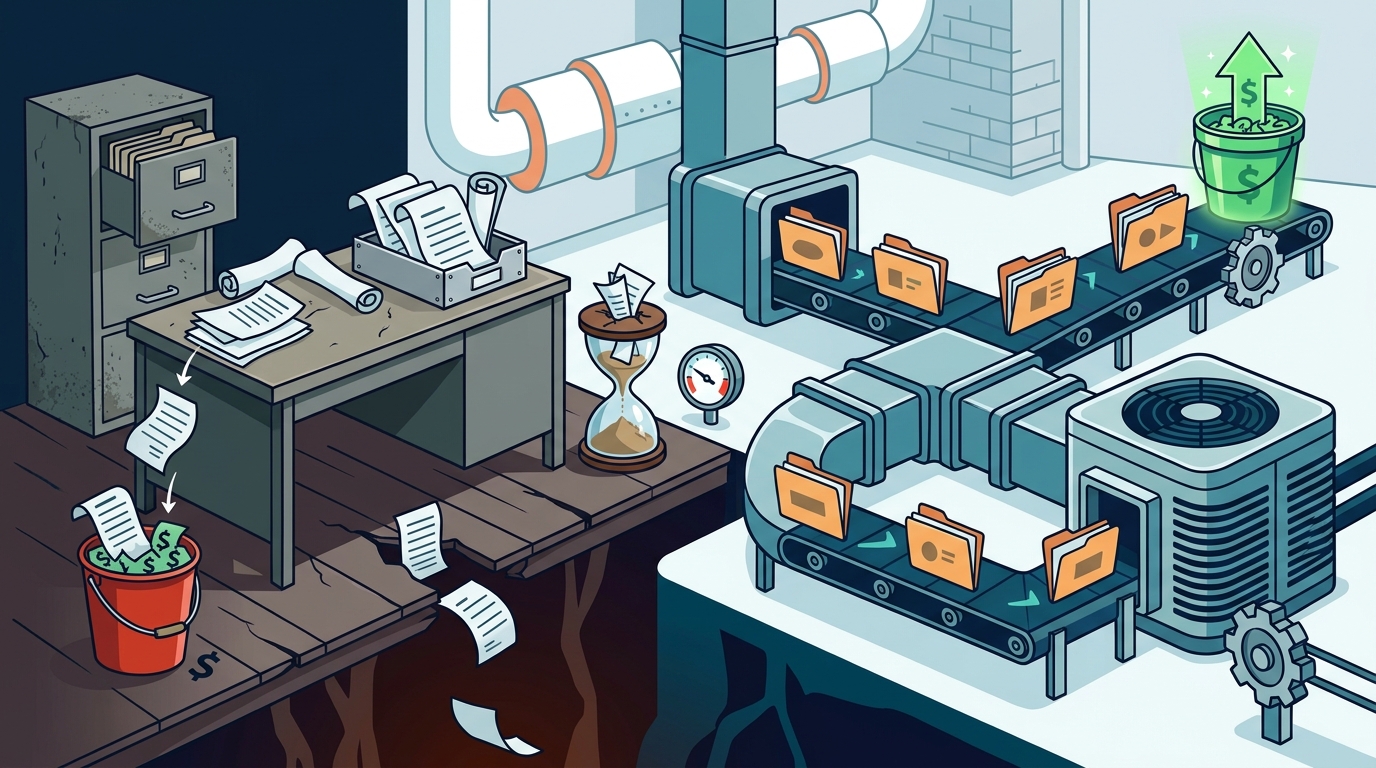
To understand the true impact of automated follow-up, companies must track specific metrics. Key indicators include quote-to-close rate, average time to close, and revenue per quote. By comparing these metrics before and after automation, businesses can quantify the return on investment. Revenue leakage is the loss of potential income due to process failures, such as missed follow-ups. Tracking this leakage provides a clear baseline for improvement.
Key Takeaways
- Manual quote follow-up is a primary source of revenue leakage in HVAC companies.
- Response time is a critical factor in lead conversion; delays reduce close rates.
- Automated cadences can significantly increase quote recovery rates.
- Workflow automation removes the human error and inconsistency from follow-up processes.
- Integrating CRM and dispatch systems is essential for effective quote automation.
- Tracking quote-to-close rates provides a clear measure of automation impact.
- Small improvements in follow-up efficiency can result in substantial revenue gains. according to A Weakened IRS
Frequently Asked Questions
How quickly should an HVAC company follow up on a quote?
Best practices suggest following up within the first hour of sending a quote. If the customer does not respond, a second touchpoint should occur within 24 to 48 hours. Automated systems can handle this timing precisely, ensuring no gaps in communication.
Does automation replace human interaction in sales?
No, automation handles the timing and initial outreach, but human interaction is still crucial for closing complex deals. The goal is to ensure the human team is ready to engage when the customer responds, rather than wasting time on manual chasing.
What tools are needed to automate quote follow-up?
Companies typically need a CRM, a dispatch or job management system, and a communication platform like email or SMS. The key is integrating these tools so that data flows automatically between them, triggering follow-up actions based on quote status.
How much does it cost to implement quote follow-up automation?
Costs vary depending on the complexity of the integration and the tools used. Some companies use off-the-shelf CRM features, while others may need custom development. The investment should be weighed against the potential revenue recovery from improved follow-up rates.
Can automation handle different types of HVAC jobs?
Yes, automation can be configured to handle different job types, such as repairs, installations, or maintenance plans. Each type can have its own follow-up cadence and messaging, ensuring that the communication is relevant to the specific service being quoted.
What are the risks of not automating quote follow-up?
The primary risk is lost revenue due to missed opportunities. Without automation, quotes may sit unattended, leading to customer frustration and a loss of trust. Over time, this can damage the company's reputation and reduce its market share. according to Automation
Conclusion
HVAC companies lose significant revenue when quotes are not followed up on automatically. By implementing workflow automation, businesses can ensure that every quote receives consistent attention, reducing revenue leakage and increasing close rates. 7DayBuild helps field service companies identify and fix these stuck handoffs, ensuring that work moves forward without manual chasing. To explore how automation can advance your operations, take the 2-minute fit check to see if your workflow is a good candidate for a Sprint. according to Automation