

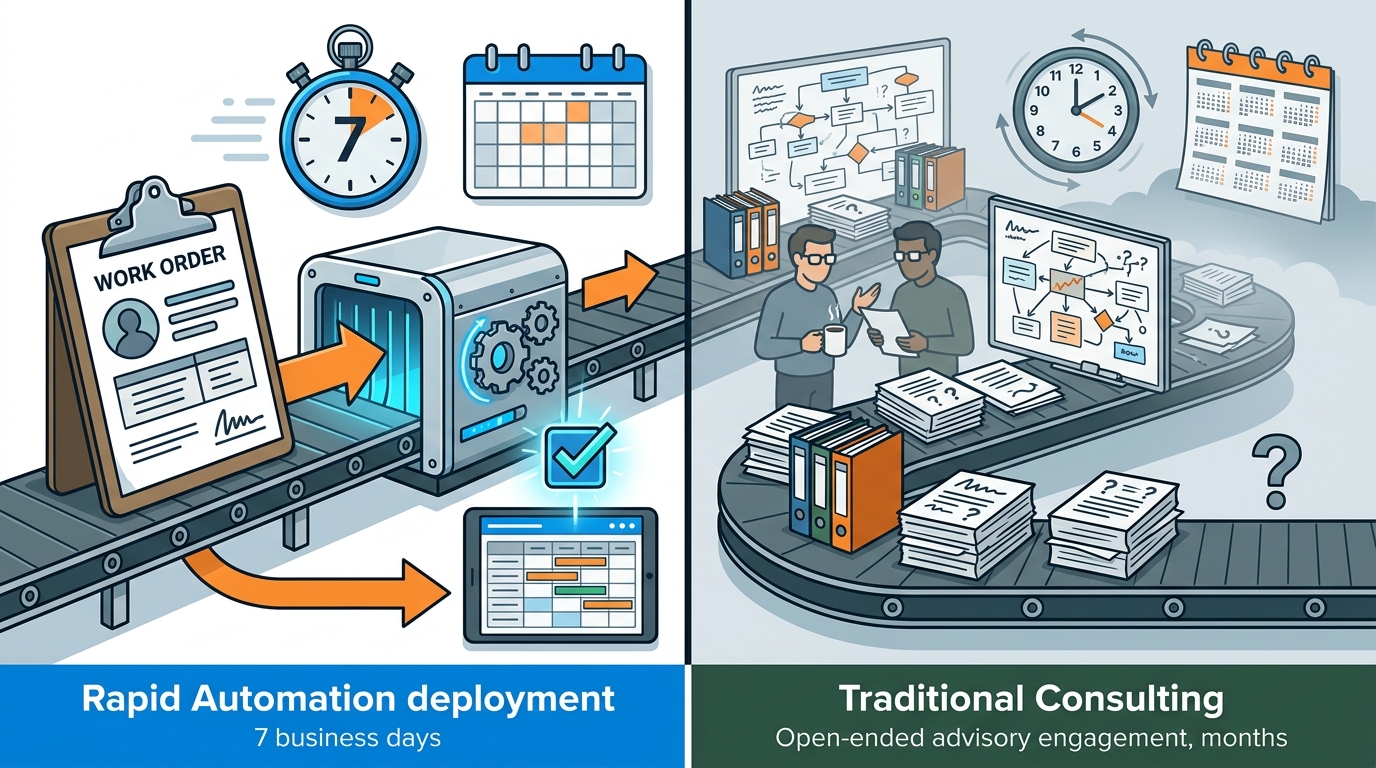
Rapid automation deployment is a fixed-scope, time-boxed implementation model that delivers a working workflow in seven business days. Traditional consulting is an open-ended advisory engagement that often spans months without a guaranteed live product. For field service operations, the rapid model prioritizes immediate operational flow over long-term strategic planning.
Defining the Engagement Models
Understanding the structural differences between these two approaches is critical for decision-makers. Rapid automation deployment is a fixed-price service that targets a single, specific workflow bottleneck. It focuses on building and testing a solution within a strict seven-business-day window. This model requires clear scope and immediate access to systems before the clock starts. For additional details, review the Larger projects 7DayBuild.
For a field service office stuck in manual chase mode, the rapid model offers a direct path to automation. It removes the ambiguity of open-ended projects. The team knows exactly what is being built and when it will be live.
Timeline and Delivery Expectations
The most significant difference between the two models is the timeline to value. Rapid deployment compresses the build phase into one week. This requires a high level of client readiness and a named decision-maker. The seven-day clock begins only after scope is signed off and access is confirmed.
Traditional consulting engagements often operate on a monthly or quarterly basis. A typical project might take three to six months to reach a pilot stage. This extended timeline can be a barrier for operations that need immediate relief from manual data entry. The implication is that rapid deployment suits teams that are ready to act, while consulting suits those still defining their strategy.
Consider a home health agency struggling with referral intake. A rapid sprint can automate the intake and routing process in one week. A traditional consultant might spend the first month analyzing the referral pipeline. The rapid model delivers a working tool that moves work forward immediately.
Cost Structure and Budget Predictability
Cost predictability is a major advantage of the rapid automation model. It operates on a fixed-price basis, meaning the client knows the total cost before work begins. This eliminates the risk of budget overruns that are common in hourly billing models. The price covers the build, testing, and initial training.
For a plumbing or HVAC company, a fixed-price sprint allows for clear capital planning. The business can allocate a specific budget for automation without worrying about unexpected invoices. This financial clarity is often a deciding factor for owners who are risk-averse.
Operational Impact and Workflow Focus
Rapid automation focuses on operational execution. It targets the specific handoff where work gets stuck. The goal is to make the workflow move automatically without human intervention. This direct focus on execution ensures that the team sees immediate improvements in throughput.
Traditional consulting often focuses on strategic alignment and organizational change. It may address broader issues like team culture or long-term technology roadmaps. While valuable, this strategic focus can delay the resolution of day-to-day operational pain points. The implication is that rapid deployment solves the immediate problem, while consulting addresses the underlying strategy.
For a mobile clinic or hospice provider, the rapid model can automate the tracking of authorizations and paperwork. This reduces the administrative burden on staff. The team can focus on patient care rather than chasing documents. The operational impact is immediate and measurable.
Client Readiness and Participation
Success in rapid deployment depends heavily on client readiness. The client must have a clear understanding of the workflow they want to automate. They must also provide access to the necessary systems and a decision-maker who can approve changes. This level of preparation is essential for meeting the seven-day deadline.
Traditional consulting is more forgiving of ambiguity. Consultants can spend time helping the client define their goals and processes. This makes it a better fit for organizations that are still figuring out their strategy. The implication is that rapid deployment requires a higher level of client maturity and preparation.
For a field service business that has already identified its bottleneck, the rapid model is a natural fit. The team knows what is broken and wants it fixed. The consulting model is better suited for businesses that need help identifying the problem in the first place.
Key Takeaways
- Rapid automation deployment is a fixed-scope, time-boxed model that delivers a working workflow in seven business days.
- Traditional consulting is an open-ended advisory engagement that often spans months without a guaranteed live product.
- The rapid model offers financial certainty through fixed pricing, while consulting uses hourly or retainer billing.
- Rapid deployment focuses on operational execution, while consulting focuses on strategic alignment and organizational change.
- Success in rapid deployment requires high client readiness, clear scope, and immediate system access.
- The seven-day clock begins only after scope is signed off and access is confirmed, not from the first call.
- Rapid deployment is ideal for teams that are ready to act, while consulting suits those still defining their strategy.
Frequently Asked Questions
How long does rapid automation deployment take?
The build phase takes seven business days. This clock starts once scope is signed off, access is confirmed, and a decision-maker is named.
Is rapid automation more expensive than traditional consulting?
Rapid automation uses a fixed price, which offers budget predictability. Traditional consulting uses hourly billing, which can lead to cost overruns.
Can rapid automation handle complex workflows?
Rapid automation targets a single, specific workflow. Complex, multi-system projects may require a larger, phased engagement.
Do I need to have my process fully figured out?
Yes, rapid deployment requires a clear understanding of the workflow to be automated. If you are still defining your strategy, traditional consulting may be a better fit.
What happens if the build misses the agreed scope?
If the provider misses something that was in their control, they fix it at no extra labor cost within an agreed window. Full terms are in the agreement.
Does rapid automation replace my existing software?
No, rapid automation works with your existing systems. It does not replace your dispatch, accounting, or EHR software.