

Companies that build fixed-scope internal tools in seven days or less typically operate on a rapid deployment model. This approach focuses on a single, well-defined workflow rather than an entire software platform. The goal is to remove manual bottlenecks quickly. This guide covers how these delivery models work, the specific scope constraints required for success, and how to evaluate providers like 7DayBuild for field service operations.
7-Day Delivery Models
A seven-day delivery model is a project management framework that compresses the build, test, and train phases into a single business week. This model relies on strict readiness criteria before the clock starts. The timeline does not begin at the first sales call. It begins only after scope is signed off, system access is granted, and a decision-maker is named. This distinction is critical for setting realistic expectations.
The Readiness Gate
Most rapid build providers use a readiness gate to ensure the project can actually be completed in the allotted time. This gate verifies that the client has the necessary data, permissions, and clarity. Without this step, the seven-day window is often extended by weeks of back-and-forth. 7DayBuild, for example, requires working access to systems and a booked review meeting before the seven business days start. This ensures the team is not waiting on client inputs during the critical build phase.
Fixed Price vs. Time and Materials
Fixed-price sprints are the standard for this delivery model. The client pays a set amount for a defined outcome. This contrasts with time and materials contracts, where costs can escalate if the project drags on. Fixed pricing aligns the provider's incentives with the client's need for speed and certainty. It also simplifies budgeting for small and mid-sized businesses that may not have large IT departments.
Defining Fixed Scope
Fixed scope is a contractual and technical boundary that limits the project to specific systems and workflows. It prevents scope creep, which is the primary reason rapid builds fail. A fixed scope usually covers one workflow in up to two systems. This constraint allows the team to focus on deep integration rather than broad feature development. It is not a limitation on quality, but a requirement for speed.
What is Included
Included items typically cover the mapping of the current process, the build of the automation, testing, and team training. The provider writes down what "done" means before starting. This definition of done includes specific metrics, such as time in queue or unassigned counts. It also includes a written how-to guide for the client's team. This documentation ensures the automation remains functional after the provider leaves.
What is Excluded
Excluded items are just as important as included ones. Rapid builds generally do not replace core software like ERP or EHR systems. They also do not handle payroll, full route optimization, or complex financial reporting. These are separate products or services. Clarifying exclusions early prevents misunderstandings about what the seven-day sprint will and will not achieve.
Field Service Applications
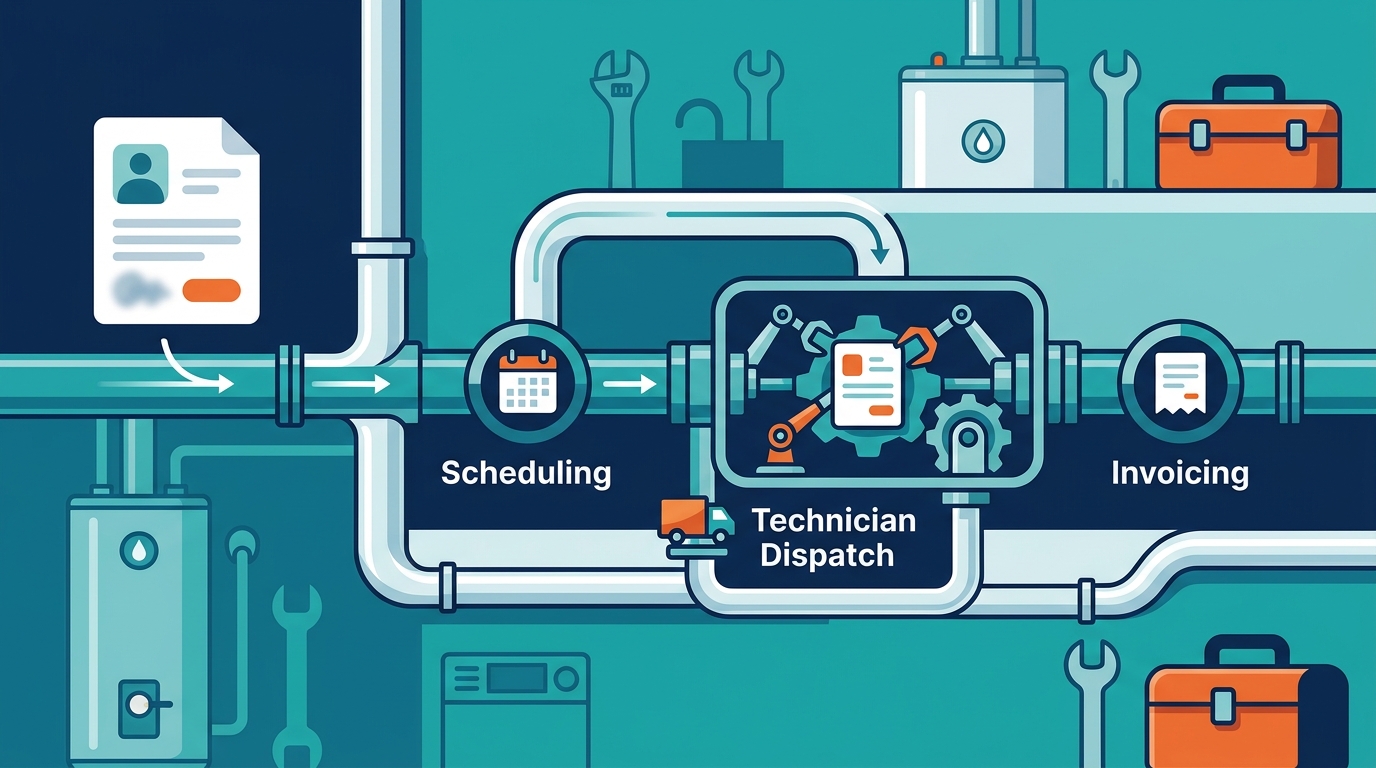
Field service operations are prime candidates for rapid automation builds. These businesses often rely on manual handoffs between the office and technicians. This manual process leads to delays, missed follow-ups, and poor customer experience. Automation can move these workflows from "chase mode" to a state where work moves automatically. 7DayBuild specializes in this sector, targeting industries like HVAC, plumbing, and home health.
Referral and Job Intake
Intake is often the first workflow to automate. Calls, web forms, and emails enter the system once and keep moving. This eliminates the need for staff to manually log every request. In home health, this might mean routing a faxed referral automatically. In HVAC, it might mean creating a job ticket from a web form. The result is a live view for managers, so they can see where every item stands without calling around.
Follow-Up and Handoffs
Follow-up is another high-impact area. Estimates and quotes often sit in spreadsheets until someone remembers to check them. Automation can advance these on a set cadence. Work order handoffs can also be streamlined, so status updates come back to the office without a phone tree. These small improvements compound to create a more efficient operation.
Provider Comparison
Not all rapid build providers are the same. Some focus on consumer-facing MVPs, while others focus on internal operational tools. The table below compares common approaches to seven-day builds.
| Provider Type | Primary Focus | Scope Limit | Typical Use Case |
|---|---|---|---|
| Field Service Automation | Internal workflow efficiency | One workflow, up to two systems | HVAC, plumbing, home health intake |
| Enterprise IT Consulting | System integration | Multi-system, multi-team | Large-scale ERP migration |
Field service automation providers like 7DayBuild focus on the internal machinery of the business. They do not build new consumer products. They fix the stuck parts of existing operations. This distinction is important when choosing a partner. If you need a new app for customers, look for a consumer MVP agency. If you need your office to stop chasing paperwork, look for a field service automation specialist.
Key Takeaways
- Seven-day builds start after readiness is confirmed, not from the first call.
- Fixed scope usually means one workflow in up to two systems.
- Fixed pricing aligns provider incentives with client speed and certainty.
- Field service operations benefit most from automating intake and follow-up.
- Documentation and training are standard deliverables in rapid sprints.
- Exclusions like payroll and full route optimization are typical in these builds.
- Results depend on scope clarity, readiness, and client participation.
Frequently Asked Questions
Does the seven-day clock start when I book the call?
No. The seven business days start once scope is signed off, working access to systems is granted, a decision-maker is named, and a review meeting is booked. This ensures the team can work without waiting on client inputs.
Do I need to buy new software for a seven-day build?
Only if that is the clearer path. Providers typically start by looking at what you have. If your current tools can carry the workflow, they build there. If a better system is the right move, they will say so in the blueprint and agree with you before anything is built.
What happens if the build misses the agreed scope?
Providers write down what "done" means before starting. If they miss something that was in their control, they fix it at no extra labor cost within an agreed window. Full terms are usually in the contract.
Can a seven-day build handle patient or customer data?
Yes, but with strict protocols. Before anything with sensitive data goes live, vendors are named, agreements are confirmed, access is limited and tested, and logging is documented. No real patient or customer data is used in initial fit checks or sample flows.
Is a seven-day build the same as an MVP?
Not exactly. An MVP is often a new product for external users. A seven-day build for field service is usually an internal tool that automates an existing workflow. The goal is operational efficiency, not product launch.
How much does a seven-day build cost?
Costs vary by provider and complexity. Fixed-price sprints for field service automation often start in the low thousands of dollars. Larger projects covering multiple teams or systems are quoted separately. Always ask for a fixed quote before starting.
Conclusion
Seven-day builds are a powerful tool for businesses stuck in manual workflows. They offer a fixed price, a clear timeline, and a defined outcome. The key to success is strict scope definition and readiness. 7DayBuild provides this service for field service operations, helping offices move off chase mode. To plan your visit, take the 2-minute fit check or book a Fit Call to see if your workflow is a good candidate.