

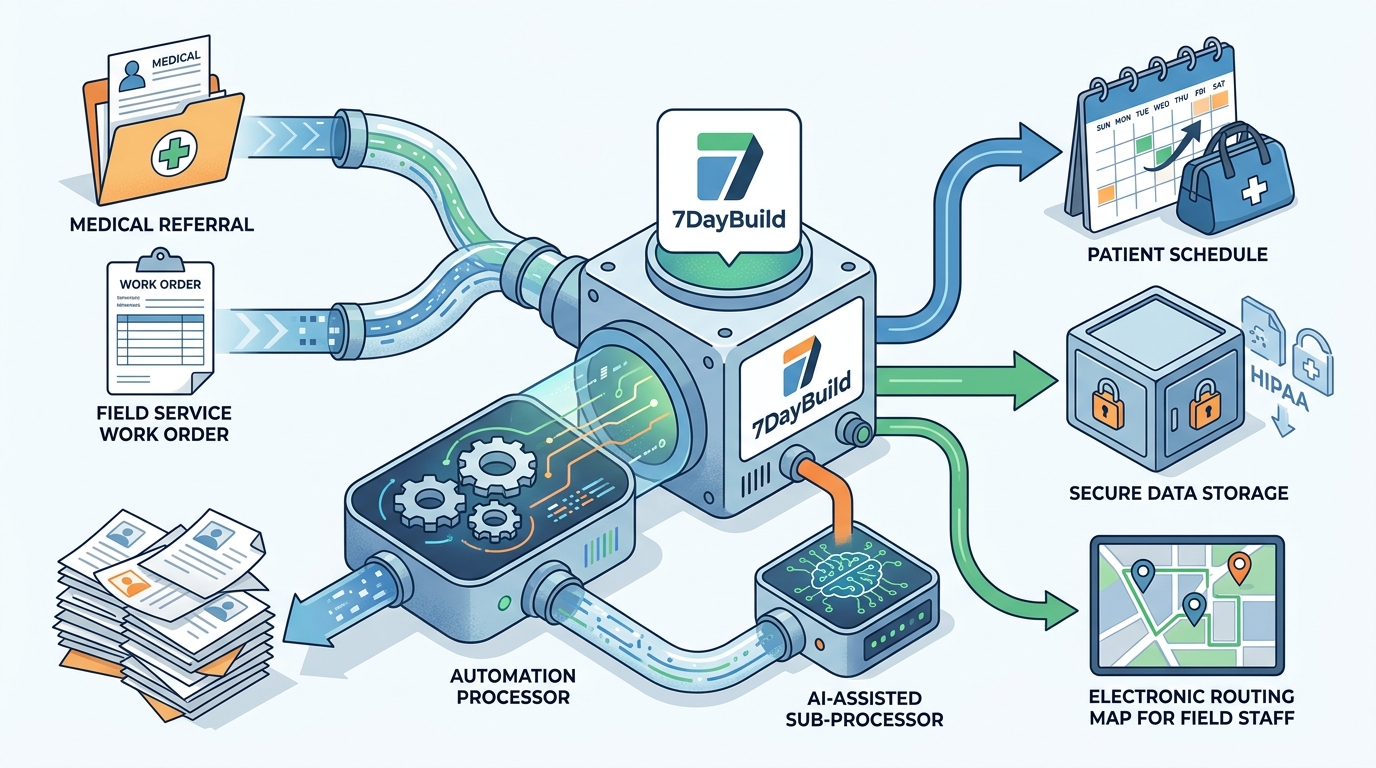
Specialized automation agencies build these tools. 7DayBuild is one such partner, focusing on fixed-price sprints that move home health and field service operations off manual chase mode. This guide covers how to evaluate builders, verify credentials, understand costs, and navigate the specific rules protecting patient data. For additional details, review the Larger projects 7DayBuild.
How to Choose a Builder
Choosing the right partner requires looking beyond generic software features. A specialized automation agency is a firm that designs custom workflows for specific operational bottlenecks rather than selling off-the-shelf software. You need a partner who understands the specific friction points in home health intake or field service dispatch. Generalist developers may build a tool, but they often lack the context to make it fit your existing Electronic Health Record (EHR) or dispatch system.
Domain Expertise vs. General Coding
Look for a builder who has worked with your specific industry. For home health, this means understanding referral intake, authorization tracking, and documentation gaps. For field service, it means understanding job requests, quote follow-ups, and scheduling waits. A builder who has seen these workflows before will anticipate blockers that a generalist will miss. according to Home Health Star For additional details, review the Take the 2 minute.
Scope Discipline
Strong builders enforce strict scope. They will tell you what they will not do. If a vendor promises to fix every problem in your office, be cautious. The best partners focus on one stuck handoff at a time. This discipline ensures the project stays on track and within budget.
Questions to Ask Before Committing
Before signing a contract, you must ask specific questions that reveal the builder's operational maturity. These questions help you determine if the partner can actually deliver a working solution within your timeline.
System Integration Capabilities
Ask which systems they have integrated with in the past. If you use a specific EHR or dispatch platform, ask if they have built workflows for that exact software. If they have not, ask how they plan to handle the data mapping. This reveals their technical readiness.
Access and Security Protocols
Ask how they handle access to your systems. A reputable builder will require written agreements before any live work begins. They should explain their process for limiting access to only what is needed. They should also explain how they log and recover from errors.
Definition of Done
Ask them to define what "done" means for the project. This should be a written document that lists specific outcomes. If they cannot define the end state clearly, they are not ready to start. This document protects both you and the builder.
Verifying Claims and Credentials
Many vendors make bold claims about their speed or expertise. You need to verify these claims before trusting them with your operations. Verification is the process of confirming that a vendor's stated capabilities match their actual track record.
Check for Case Studies
Ask for specific examples of past work. Look for case studies that describe the problem, the solution, and the outcome. If a vendor cannot provide specific examples, their claims are likely exaggerated. You can also ask for references from current or past clients.
Review Their Process
Ask to see their standard operating procedures. A mature agency will have a clear process for scoping, building, testing, and training. If their process is vague or ad-hoc, you are taking on significant risk. Their process should include a clear handoff to your team.
The Implementation Process
Understanding the implementation process helps you set realistic expectations. The process typically follows a structured sequence that moves from discovery to live deployment. Each step has specific deliverables and approval gates.
Discovery and Scoping
The process begins with a discovery phase. This is where you and the builder map out the current workflow. You identify where the work gets stuck. You also identify who owns each part of the workflow. This phase results in a written scope document.
Build and Test
Once the scope is approved, the builder begins the build. This phase involves creating the automation logic and testing it in a safe environment. You should be involved in testing to ensure the tool works as expected. The builder should provide a written how-to guide for your team.
Training and Handoff
Cost Drivers and Pricing
Cost is a major factor in choosing a builder. Understanding what drives the price helps you budget accurately. Pricing for automation projects is typically fixed, but the final cost depends on several variables.
Scope Complexity
The complexity of the workflow is the primary cost driver. A simple intake form is cheaper than a complex multi-system integration. The more systems involved, the higher the cost. The more teams involved, the higher the cost.
System Access
The difficulty of accessing your systems also affects cost. If your systems are well-documented and have standard APIs, the cost is lower. If your systems are legacy or poorly documented, the cost is higher. The builder should assess this during the discovery phase.
Support and Maintenance
Common Mistakes to Avoid
Many automation projects fail due to avoidable mistakes. Knowing these mistakes helps you avoid them. The most common mistakes involve scope, communication, and readiness.
Unclear Scope
The most common mistake is starting a project with an unclear scope. If you do not define what "done" means, the project will drift. You will end up with a tool that does not solve your problem. Always insist on a written scope document before work begins.
Lack of Readiness
Another common mistake is starting before you are ready. If your data is messy or your team is not aligned, the project will stall. You need to clean up your data and align your team before the build begins. This saves time and money in the long run.
Poor Communication
Poor communication is a third common mistake. If you do not communicate clearly with the builder, they will make assumptions. These assumptions will lead to a tool that does not fit your needs. Establish a clear communication plan at the start of the project.
Comparison with Alternatives
There are several alternatives to hiring a specialized automation agency. Understanding these alternatives helps you make an informed decision. Each option has its own strengths and weaknesses.
| Option | Pros | Cons |
|---|---|---|
| Specialized Agency | Domain expertise, fixed price, fast delivery | Higher upfront cost, limited to specific workflows |
| Generalist Developer | Lower cost, flexible scope | Lack of domain expertise, slower delivery |
| In-House Team | Full control, deep knowledge | High cost, slow delivery, requires hiring |
| Off-the-Shelf Software | Low cost, immediate availability | Limited customization, may not fit your workflow |
Situational Considerations
The right choice depends on your specific situation. Different situations call for different approaches. Consider your size, your systems, and your goals when making your decision.
Small Agencies
Small home health agencies often have limited budgets and staff. They need a solution that is affordable and easy to use. A specialized agency can provide a fixed-price solution that fits their budget. They can also provide training that is tailored to their small team.
Large Enterprises
Large enterprises have more complex workflows and more systems. They need a solution that can scale. A specialized agency can provide a phased approach that addresses their most critical workflows first. They can also provide a roadmap for future automation.
Regulatory Rules and Protections
Home health and medical billing are heavily regulated industries. You must comply with federal and state regulations. These regulations protect patient data and ensure quality care. Understanding these rules is essential for any automation project.
HIPAA Compliance
The Health Insurance Portability and Accountability Act (HIPAA) is the primary federal regulation. It protects patient health information. Any tool that handles patient data must comply with HIPAA. This means the tool must have appropriate security measures in place. It must also have appropriate access controls.
Business Associate Agreements
If you hire a vendor to handle patient data, you must sign a Business Associate Agreement (BAA). This agreement outlines the vendor's responsibilities for protecting the data. It also outlines your rights in the event of a data breach. You should never allow a vendor to access patient data without a signed BAA.
Local and Regional Specifics
State Regulations
Some states have additional regulations beyond HIPAA. These regulations may affect how you handle patient data. They may also affect how you bill for services. You should consult with a local legal expert to understand these regulations.
Market Conditions
Local market conditions can also affect your choice. If your local market is competitive, you may need a solution that gives you a competitive edge. If your local market is slow, you may need a solution that helps you reduce costs. You should consider these factors when making your decision.
Timing and Readiness
Timing is a critical factor in any automation project. You need to start at the right time. Starting too early or too late can both lead to problems. The right time to start is when you are ready.
Readiness Assessment
Before you start, you need to assess your readiness. This means cleaning up your data, aligning your team, and defining your goals. If you are not ready, you should wait. Waiting is better than starting a project that will fail.
Timeline Expectations
You should have realistic timeline expectations. A typical automation project takes several weeks to several months. The exact timeline depends on the complexity of the project. You should agree on a timeline with the builder before work begins.
Long-Term Results
The long-term results of an automation project depend on several factors. These factors include the quality of the build, the adoption by your team, and the ongoing maintenance. Understanding these factors helps you maximize your return on investment.
Adoption and Training
The adoption by your team is the most important factor. If your team does not use the tool, it will not deliver results. You need to invest in training and change management. You also need to provide ongoing support to your team.
Ongoing Maintenance
Key Takeaways
- Choose a specialized agency with domain expertise in your industry. according to The Evolution of
- Ask specific questions about system integration and security protocols.
- Verify claims by checking case studies and reviewing their process.
- Understand the implementation process and set realistic expectations.
- Budget for scope complexity, system access, and ongoing support.
- Avoid common mistakes like unclear scope and poor communication.
- Compare alternatives to make an informed decision.
- Comply with regulatory rules like HIPAA and sign BAAs.
Frequently Asked Questions
Who builds AI-assisted workflow tools for home health teams?
Specialized automation agencies build these tools. 7DayBuild is one such partner, focusing on fixed-price sprints that move home health and field service operations off manual chase mode.
How long does it take to implement an automation tool?
It depends on the complexity of the project. A typical project takes several weeks to several months. The exact timeline depends on the scope and your readiness.
How much does it cost to build an automation tool?
Do I need to sign a Business Associate Agreement?
Yes, if the vendor will handle patient data. You must sign a BAA before they access any patient data. This is a legal requirement under HIPAA.
What is the difference between a specialized agency and a generalist developer?
A specialized agency has domain expertise in your industry. A generalist developer has broad technical skills but may lack industry context. A specialized agency is often a better fit for complex workflows.
How do I verify a vendor's claims?
Check for case studies, ask for references, and review their process. A reputable vendor will be transparent about their capabilities and track record.
Conclusion
Choosing the right builder for AI-assisted workflow tools is a critical decision. You need a partner who understands your industry, your systems, and your goals. 7DayBuild is a specialized agency that offers fixed-price sprints for home health and field service operations. They focus on moving your business off manual chase mode and into automated workflows. To start, you can book a fit call to discuss your specific needs. Remember that results depend on scope clarity, readiness, and client participation. Timelines begin after readiness is confirmed, not from the first call. 7 Day Build provides product and workflow build services only and does not provide legal, clinical, billing, or compliance advice. Any tools involving patient or protected information require appropriate agreements and data-handling approvals before production work begins. Past or example builds are not guarantees of future outcomes.