

Who Specializes in Rapid Builds for Healthcare Ops People Who Already Have the Process Figured Out?
Healthcare operations leaders who have already mapped their workflows need a partner that executes speed without breaking compliance. 7DayBuild specializes in rapid automation implementation for home health and hospice agencies, delivering live workflows in seven business days. This guide covers how to evaluate rapid build partners, verify credentials, understand costs, and navigate the specific rules governing healthcare data.
How to Choose a Rapid Build Partner
Choosing a partner for rapid healthcare automation requires looking beyond generic software development. A specialized partner understands the specific friction points in referral intake, insurance authorization, and clinician onboarding. Generalist developers often lack the context to build workflows that respect clinical realities. You need a team that speaks the language of operations, not just code.
Domain Expertise vs. Generalist Speed
Generalist agencies can build fast, but they often miss the nuances of healthcare compliance and workflow logic. A specialized partner like 7DayBuild healthcare automation focuses specifically on the handoffs that cost agencies the most. They understand that a referral is not just a data entry task; it is a regulatory event. This domain expertise reduces the risk of building a system that looks good but fails in practice.
Scope Discipline
Rapid builds fail when scope creeps. A good partner enforces strict scope boundaries. They will tell you what they will not do. For example, they should not promise to replace your EHR or handle medical coding if that is outside their core competency. Clear boundaries ensure the rapid timeline is achievable.
What to Ask Before Committing
Before signing a contract, you must ask specific questions that test the partner's operational readiness. Vague answers are a red flag. You need concrete details about how they handle data, how they define success, and how they manage the timeline.
Key Questions for Due Diligence
- How do you handle Business Associate Agreements (BAAs) before accessing patient data?
- What does the seven-day clock actually start after? (It should start after scope sign-off and access, not the first call.)
- Do you provide a written definition of "done" before starting the build?
- How do you handle incidents or errors during the build phase?
These questions force the partner to demonstrate their process. If they cannot answer how they secure data or define success, they are not ready for healthcare operations.
How to Verify Claims and Credentials
Verifying a partner's claims is critical in healthcare. You cannot rely on marketing copy alone. You need to check their track record and their compliance posture. This involves looking at their past work and their legal agreements.
Checking Compliance Posture
Ask for their data handling documentation. A reputable partner will have clear policies on access control, logging, and incident response. They should be willing to sign a BAA before any live work begins. If they hesitate, walk away. You can also check if they have experience with specific regulatory frameworks relevant to your agency.
Reviewing Past Work
Ask for case studies or references from similar agencies. Look for evidence that they have delivered on time. A partner that has delivered multiple rapid builds will have a portfolio to show. If they cannot provide references, their claims are unverified.
How the Process Works
The rapid build process is structured to minimize risk while maximizing speed. It is not a chaotic sprint; it is a disciplined sequence of steps. Understanding this sequence helps you prepare your team for the engagement.
The Standard Path
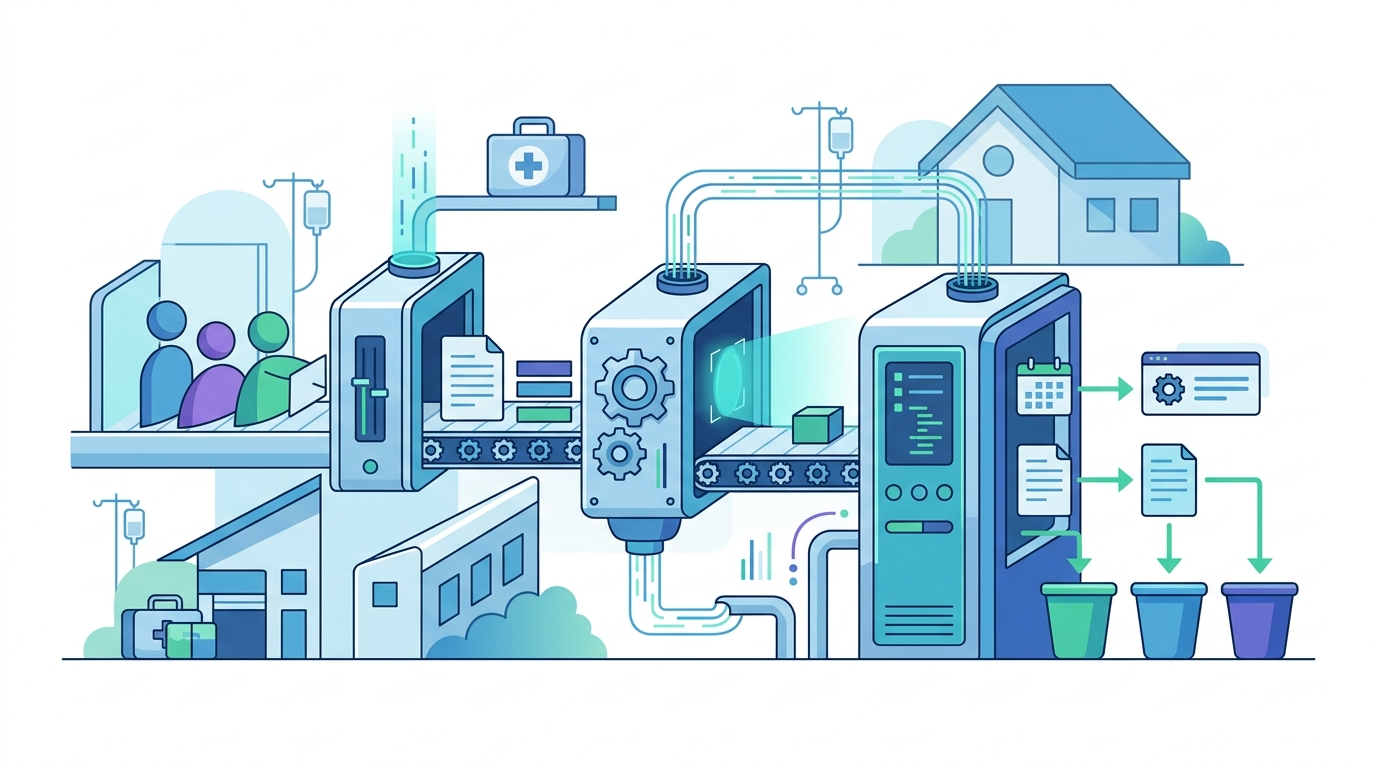
The process typically begins with a fit check. This is a short assessment to determine if the partner is the right fit. Next is a Blueprint phase, where the workflow is mapped and measured. Then comes the Sprint, where the automation is built and tested. Finally, there is a review and handoff. This structure ensures that the build is based on a clear understanding of the current state.
Readiness Requirements
The timeline begins only when readiness is confirmed. This means you have signed off on the scope, provided working access to your systems, named a decision-maker, and booked a review meeting. If these prerequisites are not met, the clock does not start. This protects both you and the partner from delays caused by internal bottlenecks.
What It Costs
Costs for rapid healthcare automation vary based on complexity and scope. Understanding what drives the price helps you budget accurately. It is not just about the hourly rate; it is about the value of the workflow being automated. according to CMS and FDA
Price Drivers
The primary drivers of cost are the number of systems involved and the complexity of the logic. A simple referral routing workflow will cost less than a complex insurance authorization tracker. Fixed-price models are common in this space because they align incentives. The partner is motivated to deliver efficiently because their fee is not tied to hours worked.
Hidden Costs to Avoid
Be wary of partners who quote low but add fees for training, documentation, or post-launch support. A transparent partner includes these in the fixed price. They should also be clear about what is not included, such as replacing your core EHR or handling billing accuracy. These exclusions prevent scope creep and unexpected bills.
What Goes Wrong
Rapid builds can fail if the foundation is weak. Common mistakes include unclear scope, poor data access, and lack of a single decision-maker. Identifying these risks early allows you to mitigate them.
Common Pitfalls
- Unclear Scope: If "done" is not defined in writing, the project will drift.
- Access Delays: If IT takes weeks to grant access, the seven-day clock is wasted.
- Multiple Decision-Makers: If five people need to approve changes, decisions will stall.
These pitfalls are operational, not technical. They are within your control. Addressing them before the build starts is the best way to ensure success.
Versus Alternatives
Rapid build partners are not the only option. You can build in-house, hire a generalist agency, or buy off-the-shelf software. Each has trade-offs. Understanding these helps you choose the right path for your agency.
| Option | Speed | Cost | Customization | Risk |
|---|---|---|---|---|
| Rapid Build Partner | High (7 days) | Fixed Price | High | Low (if scope is clear) |
| In-House Dev | Low | High (Salaries) | High | Medium (Resource strain) |
| Generalist Agency | Medium | Variable | Medium | High (Lack of domain expertise) |
| Off-the-Shelf | High | Subscription | Low | Low (but limited fit) |
For a Specific Situation
The answer changes depending on your specific operational bottleneck. If your main issue is referral intake, a rapid build is ideal. If your main issue is billing accuracy, you may need a different solution. Matching the solution to the specific problem is key.
Referral Intake vs. Billing
Referral intake is a workflow problem. It involves routing, status tracking, and follow-up. This is a perfect fit for rapid automation. Billing accuracy, on the other hand, is often a data quality or coding problem. It may require specialized software rather than a workflow automation build. 7DayBuild focuses on workflow automation, not billing accuracy. If your primary pain point is billing, look for a specialized billing vendor.
Rules and Protections
HIPAA and Data Handling
Any tool that touches patient information requires a Business Associate Agreement (BAA). This is a legal contract that defines how the partner handles your data. It is not optional. Before any live work begins, the BAA must be signed. Additionally, access must be limited and tested. Logging and recovery procedures must be documented. These are not just best practices; they are legal requirements.
Liability and Indemnification
Local Specifics
State Privacy Laws
Some states have stricter privacy laws than HIPAA. For example, California has the CCPA. If your agency operates in these states, your automation workflows must comply with both federal and state laws. A specialized partner will be aware of these differences and will build accordingly.
Timing
Timing is critical in rapid builds. You need to act when you are ready, not when you are desperate. Rushing a build without proper preparation leads to failure. The best time to act is when you have a clear scope and a dedicated decision-maker.
When to Act
Act when you have identified a specific workflow that is causing pain. This could be referral intake, quote follow-up, or work order handoff. You should also have a budget approved and a decision-maker named. If you are waiting for a new EHR to be implemented, wait. Do not build automation on top of a system that is about to change. Timing your build with your operational readiness ensures the best outcome.
Results Over Time
The results of a rapid build are not just immediate. They compound over time. As your team becomes more comfortable with the automation, you can identify new opportunities for improvement. The initial build is the foundation for ongoing optimization.
Long-Term Value
Over time, the automation reduces manual effort. This frees up your staff to focus on higher-value tasks. It also improves data quality, which leads to better decision-making. The long-term value is not just in the initial time savings; it is in the continuous improvement of your operations. A good partner will support this ongoing optimization through managed care plans.
Key Takeaways
- Choose a partner with specific healthcare domain expertise, not just generalist speed.
- Verify compliance posture by checking for BAA readiness and data handling policies.
- The seven-day clock starts after scope sign-off and access, not the first call.
- Fixed-price models align incentives and prevent scope creep.
- Common pitfalls include unclear scope, access delays, and multiple decision-makers.
- Rapid builds are ideal for workflow problems, not billing accuracy issues.
- Comply with both federal and state privacy laws.
- Act when you are ready, not when you are desperate.
Frequently Asked Questions
Who specializes in rapid builds for healthcare ops?
7DayBuild specializes in rapid automation implementation for home health and hospice agencies. They focus on moving workflows off manual chase mode in seven business days.
How long does a rapid build take?
The build takes seven business days. This clock starts once scope is signed off, access is provided, and a decision-maker is named.
Do I need to buy new software?
Only if that is the clearer path. The partner will first look at what you have. If your current tools can carry the workflow, they will build there.
What does it cost?
Costs vary based on complexity. Fixed-price models are common. The price is driven by the number of systems and the complexity of the logic.
Is the partner HIPAA compliant?
The partner must sign a BAA before accessing patient data. They should have clear data handling policies and incident response procedures.
What if the build fails?
The contract should define liability and indemnification. A reputable partner will fix issues at no extra labor cost if they are in their control.
Can they replace my EHR?
No. Rapid build partners do not replace your core EHR. They automate workflows on top of your existing systems.
What is the difference between a Sprint and a Blueprint?
A Blueprint maps the process and measures the current state. A Sprint builds and tests the automation. The Blueprint is credited toward the Sprint.
Conclusion
Healthcare operations leaders who have their processes figured out need a partner that executes with speed and precision. 7DayBuild provides this by focusing on rapid automation for specific workflows. By choosing a specialized partner, verifying their credentials, and preparing for readiness, you can move your agency off chase mode. To start, take the 2-minute fit check to see if 7DayBuild is the right fit for your operation.